
"first coffee tree"
20000 article(s) found

The spread, History, Culture and Development of Coffee in America
Coffee was first drunk in North America in 1688, and soon after, cafes appeared in New York, Philadelphia, Boston, and other towns. The Boston riots of 1773 were planned in a cafe called Green Dragon. Both the New York Stock Exchange and the Bank of New York were founded in cafes, in what is now known as Wall Street, the financial district. The coffee is

Vietnamese coffee trees are all Javanese or bourbon varieties introduced into Vietnam.
Today's production power, tomorrow's production giant. Perhaps under the influence of French colonial rule, coffee grown in Vietnam has a French flavor. Arabica coffee was first brought to Vietnam by French missionaries. More than 400,000 coffee trees were introduced to Vietnam from 1865 to 1876 and were planted near Tonkin Bay, mostly Java or bourbon varieties. At present, coffee production in Vietnam is continuous.

Recommended by coffee and bean producing countries of Reunion
In 1715, the first coffee trees (about 40) were transported from the Yemeni port of Moka to La Runion, but unfortunately only two survived. By 1719, coffee plantations had flourished and the first beans were sold. Over the next few years, the government took a hard measure: the islanders, black and white, had to plant 100 coffee trees a year. The law was amended in 1723

Coffee producing area-- Reunion
In 1715, the first coffee trees (about 40) were transported from the Yemeni port of Moka to La Runion, but unfortunately only two survived. By 1719, coffee plantations had flourished and the first beans were sold. Over the next few years, the government took a hard measure: the islanders, black and white, had to plant 100 coffee trees a year. The law was amended in 1723

Basic knowledge of Coffee planting and picking of coffee trees
One of the characteristics of a coffee tree is that its fruit can bear fruit several times a year, and another is that flowers and fruits coexist at different stages of ripening. If the fruit is too ripe, the beans in it will rot. If the beans are not ripe, the beans will not ripen by themselves. So bean pickers often go through the same tree several times to find ripe fruit, but try their best.
Introduction to Coffee trees
First, the planting and regional distribution of coffee trees. Botanically, coffee trees belong to the subgenus Rubiaceae, but coffee beans, commonly known as coffee beans, are actually the seeds of the fruit of coffee trees, just because they are shaped like beans, so they are called coffee beans. Climate is the decisive factor for coffee cultivation. Coffee trees are only suitable for growing in the tropics or subtropics, so the latitude between south and north is between 25 degrees.
Successful trial planting of coffee in Yun'an, Guangdong Province
The trial planting of coffee trees in Yun'an County, Yunfu City, Guangdong Province has been successful, and experts point out that it is the first base for successful planting in a large area of Guangdong. Dr. Song Fuping of the South China Branch of the China Tropical Plant Research Institute affirmed the success of planting coffee trees in the county, saying that this is the first base for large-scale successful planting in Guangdong. Zhu Weiguo, secretary of the Zhenan town party committee in Yunan County, said that more and more villagers are also planting coffee trees

The History of Coffee trees what are the environmental requirements for planting coffee trees
In fact, the Arabs began to grow coffee in 525 BC, and chewing fried coffee beans became popular in the Arab region. In 890 AD, Arab merchants sold coffee beans to Yemen, and Yemenis made coffee beans into drinks for the first time. In the 15th century, coffee was introduced into Europe, Asia and soon into America. By the 18th century, tropical and subtropical regions around the world were widespread.

How do coffee beans grow coffee tree varieties picture Daquan coffee beans species distinction
Professional coffee knowledge exchange more coffee bean information please follow the coffee workshop (Wechat official account cafe_style) 1. Coffee tree height: the average Arabica coffee tree height can reach 3 to 5 meters. The length of the main root is about 30 to 40 cm. The caffeine tree is divided into two different branches: the erect branch and the transverse branch. The growth habit of the erect branch is from bottom to top, also known as the main branch.
Coffee tree
Coffee tree coffee (Xoffea arabica Linn) coffee is a perennial evergreen shrub or small tree of Rubiaceae. It is a horticultural perennial cash crop with the characteristics of fast growth, high yield, high value and wide market. Wild coffee trees can grow to 5 to 10 meters high, but coffee trees planted on manors are often cut to less than 2 meters in order to increase fruit and facilitate harvesting.
Coffee beans and coffee trees varieties of coffee trees
After understanding the different types of coffee, let's take a look, especially the Arabica coffee that people are most concerned about can be divided into many different varieties.

Planting conditions of Coffee trees what conditions do you need to grow coffee trees
Coffee tree coffee (Xoffea arabica Linn) coffee is a perennial evergreen shrub or small tree of Rubiaceae. It is a horticultural perennial cash crop with the characteristics of fast growth, high yield, high value and wide market. Wild coffee trees can grow to 5 to 10 meters high, but coffee trees planted on manors are often cut to less than 2 meters in order to increase fruit and facilitate harvesting.
What does the coffee tree look like? What kind of coffee do you have? What are the characteristics of flowers and fruits of coffee trees?
Professional coffee knowledge exchange more coffee bean information Please follow the coffee workshop (Wechat official account cafe_style) when you drink a delicious latte or handmade coffee, it is hard to imagine that it is the product of a plant, the fruit produced by countless coffee trees in the world provides the source of our vitality. But what exactly does a coffee tree look like? What kind do you have? And coffee trees.

Cold knowledge of rose summer coffee: China was the first to introduce rose summer varieties for planting, which became famous earlier than rose summer
Professional coffee knowledge exchange more information on coffee beans Please follow the coffee workshop (Wechat official account cafe_style) rose summer coffee beans, some people call it geisha coffee or geisha beans, they are all the same kind of coffee beans. Its name comes from Geisha Mountain in Ethiopia, which sounds like the famous Japanese geisha, hence its name. Rose summer coffee beans

The morphological characteristics of coffee trees the geographical distribution of coffee trees
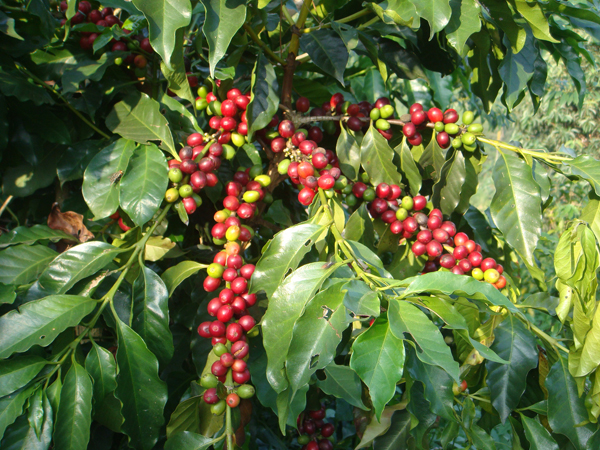
Coffee fruit Coffee Tree is a shrub or small tree of Rubiaceae; the leaves are opposite, leathery and long ovate; every March, the branches appear white flowers, petals spirally arranged, and the heart jumps around the petals. Take a closer look, it is really like a small windmill playing in childhood, emitting the fragrance of jasmine flowers; the fruit is oval, berry, crimson, hidden two
Explain the planting and cultivation of coffee trees in detail to understand the growth environment and needs of coffee trees.
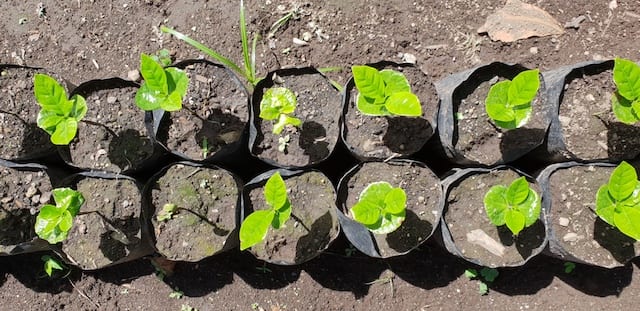
(1) Seedling propagation Coffee seedling propagation can be divided into seed propagation and asexual reproduction. 1. Seed propagation (1) seed collection, seed washing and seed storage during the full ripening period of coffee (the full ripening period of medium-grain coffee in Hainan Island is from February to March, and that of small seed is from September to November). The fully ripe fruits are picked from strong and high-yielding mother trees to make seeds. Immediately after the fruit is harvested, peel and wash the seeds. The method is to place the fruit.
Coffee planting technology: how to make coffee trees grow up quickly? Improve the success rate of planting?
Professional coffee knowledge exchange more information about coffee beans Please follow the coffee workshop (Wechat official account cafe_style) what are the fruits and seeds of coffee? The coffee tree is a tropical plant that belongs to an evergreen shrub that grows at the equator and 25 degrees north and south latitudes, that is, within the Tropic of Cancer. Near the Tropic of Cancer and the equator is the world coffee.

The planting temperature of coffee tree is between 15 degrees and 25 degrees.
The origin of the coffee tree is Ethiopia in Africa. In botany, coffee trees belong to the evergreen trees of the subgenus Rubiaceae, and coffee beans, commonly known as coffee beans, are actually the seeds of the fruit of coffee trees. They are called coffee beans only because they are shaped like beans. Climate is the decisive factor for coffee cultivation. Coffee trees are only suitable for growing in the tropics or subtropics, so latitude 25 degrees south and north.
The growth of coffee trees
The growth and fruit of coffee trees varies with different varieties / environmental conditions. In the high altitude area of Yunnan, the small seed coffee cultivated has the advantages of cold climate, large cloud cover, short light and slow plant growth, but the branches develop into sturdy backbone branches after the first branch bears fruit, and the second / third branch has strong ability to produce. The growth is exuberant and the fruit is dense, which is the main fruiting branch, so it is suitable to adopt single trunk shaping. Two / three

Cultivation techniques of Coffee Tree Seedling Propagation and Establishment of Coffee Garden
(1) Seedling propagation Coffee seedling propagation can be divided into seed propagation and asexual reproduction. 1. Seed propagation (1) seed collection, seed washing and seed storage during the full ripening period of coffee (the full ripening period of medium-grain coffee in Hainan Island is from February to March, and that of small seed is from September to November). The fully ripe fruits are picked from strong and high-yielding mother trees to make seeds. After the fruit is harvested, peel and wash the seeds immediately. The method is to remove the fruit.